Description
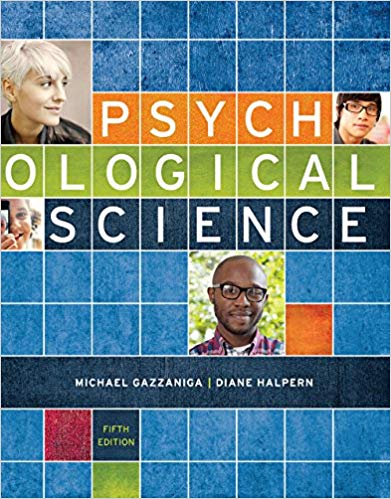
Psychological Science 5th Edition By Michael Gazzaniga – Test Bank
If you’ve been searching for Psychological Science 5th Edition By Michael Gazzaniga – Test Bank, you’re definitely not the only one. Every semester, thousands of psychology students start looking for study resources that can help them prepare for quizzes, midterms, and finals without feeling completely overwhelmed. Honestly, I’ve been there. Psychology is fascinating, but the amount of material you need to remember? It can feel endless.
The real question isn’t just where to find a test bank. It’s whether it’s the right study tool for you and how to use it responsibly alongside your course materials. Let’s dig into that.
What Is the Psychological Science 5th Edition By Michael Gazzaniga Test Bank?
A test bank is a collection of practice questions that instructors may use when creating exams. These questions often cover important concepts from the textbook, helping educators evaluate student understanding.
For a popular textbook like Psychological Science (5th Edition) by Michael Gazzaniga and co-authors, students frequently search for practice materials because the course covers topics like:
- Cognitive psychology
- Brain and behavior
- Learning and memory
- Sensation and perception
- Developmental psychology
- Social psychology
- Psychological disorders
- Research methods and statistics
That’s…a lot to keep straight.
Having access to quality practice questions can make reviewing much more interactive than simply rereading chapters.
Why Is This Textbook So Popular?
One thing that stands out about Psychological Science 5th Edition is how it connects scientific research with everyday experiences.
Instead of memorizing endless definitions, you’re encouraged to understand questions like:
- Why do people remember false memories?
- How does attention actually work?
- Why do emotions affect decision-making?
- What shapes human behavior?
Personally, that’s what makes psychology interesting. It’s one of those subjects where you start noticing examples everywhere.
How Students Usually Prepare for Psychology Exams
Not everyone studies the same way.
Some people highlight every page (been there…didn’t help much).
Others create flashcards.
Some join study groups.
Many students combine several methods, including:
- Reading each chapter carefully
- Reviewing lecture notes
- Making concept maps
- Using practice questions
- Testing themselves repeatedly
- Explaining concepts out loud
That last one sounds weird until you try it.
If you can explain operant conditioning to your roommate—or even your dog—you probably understand it pretty well.
Can Practice Questions Actually Improve Learning?
Short answer?
Yes.
Educational research consistently shows that retrieval practice, or testing yourself, helps strengthen long-term memory.
Instead of repeatedly reading a chapter, answering questions forces your brain to actively retrieve information.
That’s where practice questions become valuable because they help identify:
- Topics you already understand
- Concepts you’re forgetting
- Areas needing more review
- Common mistakes before the real exam
And guess what?
Getting questions wrong during practice isn’t necessarily bad. In fact, that’s often when the biggest learning happens.
What Should You Look for in Quality Study Materials?
Not every study resource is equally useful.
Good practice materials should:
Cover Every Major Chapter
Skipping important topics can leave gaps in your understanding.
Focus on Concepts Instead of Memorization
Psychology isn’t just about remembering vocabulary.
Many exams ask you to apply ideas to real-life situations.
That’s a completely different skill.
Include Different Question Styles
Helpful review questions often include:
- Multiple choice
- Scenario-based questions
- Concept matching
- Short-answer prompts
- Critical thinking exercises
Variety keeps studying from becoming painfully repetitive.
Common Topics Covered in Psychological Science 5th Edition
Although every instructor emphasizes different chapters, many psychology courses include themes such as:
Biological Foundations of Behavior
You’ll explore:
- Neurons
- Brain structures
- Neurotransmitters
- Genetics
- Evolution
Some of these names can feel impossible to remember at first.
They eventually start making sense.
Mostly.
Learning and Memory
This section often introduces:
- Classical conditioning
- Operant conditioning
- Observational learning
- Working memory
- Long-term memory
- Forgetting
You know what’s weird?
Once you study memory long enough, you start questioning your own memories.
Psychology does that to people.
Sensation and Perception
Students learn how the brain interprets information from:
- Vision
- Hearing
- Taste
- Touch
- Smell
It’s surprising how much of what we “see” is actually constructed by the brain.
Social Psychology
Topics may include:
- Group behavior
- Stereotypes
- Attraction
- Helping behavior
- Conformity
- Obedience
These chapters usually spark some of the best classroom discussions.
Everyone has an opinion.
Better Ways to Prepare Than Just Memorizing Answers
Let’s get this out of the way…
Simply memorizing answers isn’t the same as understanding psychology.
A stronger study routine might look something like this:
- Read one chapter.
- Summarize the main ideas in your own words.
- Create flashcards for key terms.
- Answer practice questions.
- Review mistakes.
- Repeat a few days later.
Simple.
Not necessarily easy.
But effective.
Mistakes Students Often Make While Studying Psychology
It’s surprisingly common to:
- Wait until the night before the exam.
- Read without testing yourself.
- Ignore research methods.
- Skip statistics chapters.
- Memorize vocabulary without understanding concepts.
Honestly?
Research methods may not be the most exciting chapter…
But instructors love asking questions about it.
Is Group Study Worth Trying?
This one depends.
Some study groups become productive learning sessions.
Others become two hours of talking about literally everything except psychology.
If you join a group, try to:
- Quiz one another
- Explain difficult concepts
- Compare notes
- Discuss real-world examples
- Keep everyone on track
A little structure goes a long way.
Building Confidence Before Exam Day
Feeling nervous is completely normal.
Instead of cramming until 2 a.m., consider:
- Sleeping enough the night before
- Reviewing summaries rather than entire chapters
- Practicing recall instead of rereading
- Taking short study breaks
- Staying hydrated
Not exactly groundbreaking advice.
But it’s amazing how often people ignore the basics.
Choosing Study Resources Wisely
There are countless study materials online, but quality varies.
Look for resources that:
- Match your textbook edition
- Encourage understanding rather than memorization
- Help reinforce concepts through practice
- Complement your instructor’s lectures and assigned readings
The goal should always be learning the material—not just recognizing answer patterns.
Reviews
There are no reviews yet.