Description
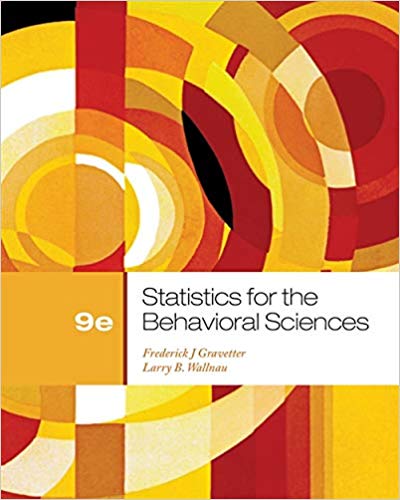
Statistics for the Behavioral Sciences 9th Edition By Frederick J Gravetter – Test Bank
Statistics has a reputation for making students nervous. And honestly, I get it. You can read a chapter, understand every example while you’re reading it, and then stare at a practice problem five minutes later thinking, “Wait… where did that number come from?”
That’s exactly why a Statistics for the Behavioral Sciences 9th Edition By Frederick J Gravetter – Test Bank can be useful during exam preparation. Instead of spending hours rereading chapters without knowing whether you actually remember the material, practice questions give you something concrete to work with.
You answer. You check. You figure out what went wrong. Then you try again.
Simple idea, but surprisingly effective.
Why Statistics for the Behavioral Sciences Can Feel So Difficult
Let’s get this out of the way: statistics isn’t usually difficult because every concept is impossible.
The problem is that the concepts build on each other.
You might start with basic terminology, move into frequency distributions, then deal with measures of central tendency, variability, probability, sampling, hypothesis testing, and eventually more involved calculations.
Miss one important idea early on, and the next chapter suddenly feels ten times harder.
That’s where regular practice can make a difference.
A Statistics for the Behavioral Sciences 9th Edition test bank can give students a structured way to review the material and see which concepts they genuinely understand and which ones still need work.
What Is a Statistics for the Behavioral Sciences 9th Edition Test Bank?
A test bank is a collection of questions created around the material covered in the corresponding textbook.
For students using Statistics for the Behavioral Sciences, 9th Edition by Frederick J. Gravetter and Lori-Ann B. Forzano, practice questions can be used to review concepts and prepare for assessments.
Rather than treating the test bank as something you simply memorize, it’s much more useful as a self-checking tool.
Think of it like this:
You study a chapter.
You answer several questions.
You miss a few.
Those missed questions tell you exactly where your understanding is shaky.
That’s useful information.
How a Test Bank Can Help With Statistics Exam Preparation
The biggest advantage of practice questions is that they force you to do something with the information.
Reading a definition of standard deviation might make perfect sense.
But can you recognize when you should use it?
Can you interpret the result?
Can you tell the difference between variability and standard error?
Can you explain what a statistical result means in the context of behavioral research?
Those are different skills.
Practice Instead of Just Rereading
Honestly, rereading is comfortable.
You see the same information again and think, “Yep, I know this.”
Then the exam asks you to apply it differently.
Ouch.
Practice questions remove some of that false confidence because you have to produce an answer rather than simply recognize information on a page.
Find Your Weak Spots Early
One of the smartest ways to use a Statistics for the Behavioral Sciences 9th Edition test bank is to use it before you think you’re ready.
Take a few questions after studying a chapter.
If you get them wrong, that’s not a failure. It’s actually helpful.
Now you know where to focus.
Maybe you understand mean, median, and mode perfectly but struggle with variance. Great. Spend your next study session on variance instead of reviewing everything from scratch.
Understanding Descriptive Statistics
Descriptive statistics are often among the first major concepts students encounter.
You’ll likely work with ways to summarize and describe data.
That can include measures such as:
- Mean
- Median
- Mode
- Range
- Variance
- Standard deviation
The tricky part isn’t always calculating these values.
It’s understanding what they actually tell you.
For example, two datasets can have similar averages but very different amounts of variability.
That difference matters.
Practice questions can help you move beyond memorizing formulas and start interpreting what the numbers mean.
Getting Comfortable With Z-Scores
Z-scores are another topic that students often need extra practice with.
The basic idea is fairly manageable: a z-score tells you how far a particular score is from the mean in standard deviation units.
Sounds simple enough, right?
Then you get a question with actual numbers, and suddenly you’re checking your formula three times.
That’s normal.
The best approach is to practice until the process becomes familiar. Once you understand what the z-score represents—not just how to calculate it—the questions become much less intimidating.
Hypothesis Testing and Statistical Decisions
This is where behavioral statistics can start feeling more serious.
Hypothesis testing requires you to understand what you’re testing, what the results mean, and how statistical evidence affects your decision.
You may encounter concepts such as:
- Null hypotheses
- Research hypotheses
- Alpha levels
- Critical regions
- Statistical significance
- Type I and Type II errors
These terms can blur together if you only memorize definitions.
Try connecting each idea to an actual research situation.
That tends to make the material easier to remember.
Why Practice Questions Matter for Behavioral Science Students
Statistics for behavioral sciences isn’t just about doing calculations.
The numbers are connected to research.
Psychology, sociology, education, human development, and related fields rely on statistical methods to interpret observations and research findings.
So when you’re working through statistics questions, it helps to ask yourself:
What does this result actually mean?
Not just, “Did I get the number right?”
That little habit can improve your understanding quite a bit.
Tips for Studying Statistics When You’re Short on Time
Not everyone has a week to prepare for an exam.
Sometimes you have two days.
Sometimes… one night.
Not ideal, but it happens.
If you’re short on time, focus on the areas that are most likely to give you trouble.
Create a quick list of:
- Formulas you need to know
- Terms you confuse
- Types of statistical tests
- Common calculation mistakes
- Concepts you repeatedly miss in practice questions
Then work through those areas first.
Don’t spend 45 minutes reviewing something you already know just because it’s easy.
That feels productive, but it’s not always the best use of your time.
Make Your Statistics Study Sessions More Effective
You don’t need some complicated study system.
Try keeping sessions focused.
For example, spend 30 minutes on one topic, answer practice questions, take a short break, and then move to another topic.
And write things down.
I know, obvious advice.
But actually writing out a problem—rather than solving everything mentally—can reveal where you’re making mistakes.
For calculation-heavy subjects, that matters.
Teach the Concept to Someone Else
This is another surprisingly good test.
Pretend you’re explaining a statistical concept to a friend who has never taken the class.
If you can explain it clearly, great.
If you find yourself saying, “Well, basically, you just kind of…” and then getting stuck, you probably need another look at the material.
No shame in that.
Is the Gravetter Statistics Test Bank Useful for Self-Study?
It can be, particularly when it’s used alongside the textbook and your regular class resources.
A practice question doesn’t replace learning the underlying concept.
It gives you a way to check whether you learned it.
That distinction is important.
If you’re preparing for an exam based on Statistics for the Behavioral Sciences 9th Edition, practice questions can add structure to your study routine and help you identify topics that deserve more attention.
Personally, I’d much rather discover a weak area while studying than discover it halfway through an exam.
Common Mistakes Students Make When Studying Statistics
A few habits tend to cause trouble.
Memorizing Formulas Without Understanding Them
Knowing a formula is useful.
Knowing when and why to use it is better.
Ignoring Incorrect Answers
A wrong answer is valuable information.
Don’t just look at the correct answer and move on. Figure out why yours was wrong.
Studying Only the Easy Chapters
We all do this.
The familiar topics feel good because you can answer questions quickly.
But your difficult topics are where the extra study time usually pays off.
Waiting Until the Last Minute
Statistics tends to punish cramming.
There are too many connected concepts to absorb comfortably in one sitting.
Even 20–30 minutes of practice each day can be more useful than one giant study session at the end.
Frequently Asked Questions
What is the Statistics for the Behavioral Sciences 9th Edition Test Bank?
The test bank is a collection of practice questions related to the material covered in Statistics for the Behavioral Sciences, 9th Edition by Frederick J. Gravetter and Lori-Ann B. Forzano. It can be used to review concepts and prepare for course assessments.
How should I study with the Gravetter Statistics 9th Edition Test Bank?
Start by reviewing the appropriate textbook chapter, then answer practice questions without using your notes. Check your answers, investigate mistakes, and return to the textbook whenever a concept isn’t clear.
Can a test bank help me prepare for a statistics exam?
Yes. Practice questions can help you become more comfortable with calculations, terminology, statistical reasoning, and interpretation. They’re most effective when combined with your textbook, lecture notes, and other course materials.
Should I memorize the answers in a statistics test bank?
No. Memorizing answer choices isn’t a reliable way to prepare. Focus on understanding the process behind the answer so you can handle questions with different numbers or wording.
What topics should I focus on in behavioral statistics?
That depends on your course, but common areas include descriptive statistics, variability, z-scores, probability, sampling distributions, hypothesis testing, t-statistics, correlation, regression, and analysis of variance.
Reviews
There are no reviews yet.