Description
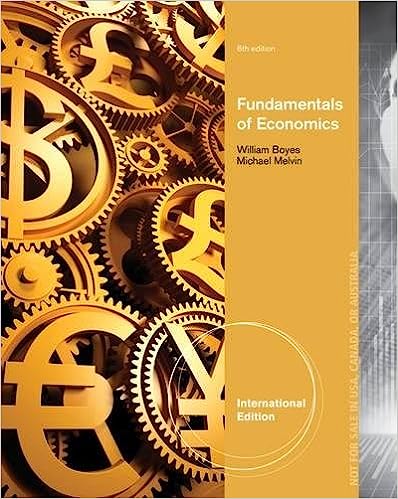
Test Bank For Fundamentals of Economics International Edition 6th Edition by Melvin Boyes
If you’ve been searching for the Test Bank For Fundamentals of Economics International Edition 6th Edition by Melvin Boyes, you’re definitely not alone.
Economics courses have become more challenging than ever, especially as professors focus less on memorization and more on applying concepts to real-world situations. Students everywhere are looking for better ways to prepare for quizzes, exams, and assignments without spending endless nights buried in textbooks.
Honestly, I’ve been there.
You read an entire chapter, feel pretty confident, and then a multiple-choice question completely throws you off. Not even kidding.
That’s exactly why many students turn to test banks as part of their study routine.
Why Students Search for Fundamentals of Economics International Edition 6th Edition Test Bank
Let’s get this out of the way…
Economics isn’t always easy.
Some concepts seem straightforward at first. Supply and demand? Sure.
Then suddenly you’re analyzing market structures, opportunity costs, elasticity, and government intervention, and your brain starts asking for a vacation.
The Fundamentals of Economics International Edition 6th Edition by Melvin Boyes covers a wide range of economic principles that students need to understand thoroughly.
A test bank can help bridge the gap between reading and actually understanding the material.
Practice Questions Make a Huge Difference
You know what’s weird?
Many students spend hours highlighting textbooks but very little time testing themselves.
Reading feels productive.
Practice feels uncomfortable.
But guess what?
The uncomfortable part is often where the learning happens.
Working through practice questions helps you:
- Strengthen economic reasoning
- Identify weak areas
- Improve test-taking skills
- Build confidence before exams
- Understand how concepts are applied
And honestly, confidence can make a bigger difference than people realize.
Benefits of Using Test Bank For Fundamentals of Economics International Edition 6th Edition by Melvin Boyes
Learn Economics Through Application
Economics is more than definitions.
It’s about understanding how individuals, businesses, and governments make decisions.
A quality test bank challenges you to apply concepts rather than simply memorize terms.
That’s where real learning starts.
Better Exam Preparation
Nobody enjoys walking into an exam feeling unprepared.
Trust me.
When you’ve already worked through dozens or even hundreds of practice questions, exam questions feel much less intimidating.
Suddenly, you recognize patterns.
You understand what instructors are looking for.
And that’s a great feeling.
Quickly Spot Areas That Need Improvement
Maybe you’re great at microeconomics but struggle with macroeconomic policy.
Or maybe elasticity questions keep giving you trouble.
A test bank can reveal those weaknesses early, giving you time to improve before the actual exam.
How Economics Students Commonly Use Test Banks
Every student studies differently.
Some people use practice questions after every chapter.
Others save them for midterms and finals.
Popular study approaches include:
- Chapter-by-chapter review
- Weekly self-testing sessions
- Group study discussions
- Mock exam practice
- End-of-semester review
The real question is…
Which approach helps you learn best?
There’s no perfect answer.
The best method is usually the one you’ll consistently follow.
Study Smarter, Not Harder
A lot of students think studying longer automatically means studying better.
Personally, I don’t buy that.
Two focused hours of active practice often beat six hours of passive reading.
Not always.
But pretty often.
What Makes a Good Economics Test Bank?
Not every study resource offers the same value.
Some look impressive until you actually start using them.
Personally, I found it kinda sketchy when practice questions seemed unrelated to textbook material.
A quality economics test bank should provide:
Comprehensive Chapter Coverage
You want questions that cover all major topics, not just a handful of chapters.
Complete coverage helps ensure you’re prepared for anything your instructor might include.
Accurate and Relevant Questions
Practice questions should reflect the concepts taught in the textbook.
Otherwise, you’re just wasting valuable study time.
Detailed Answer Explanations
Correct answers matter.
Understanding why they’re correct matters even more.
Strong explanations help build critical thinking skills that extend beyond a single exam.
Common Mistakes Students Make When Using Test Banks
A test bank is a study tool.
Not a shortcut.
Some students accidentally use them the wrong way.
Here are a few common mistakes:
Memorizing Answers Instead of Concepts
This happens all the time.
Students remember answer choices without understanding the underlying principles.
Economics exams often present concepts in new ways.
Understanding always beats memorization.
Ignoring Incorrect Answers
Getting questions wrong isn’t failure.
It’s feedback.
Those mistakes often teach more than the questions you answer correctly.
Waiting Until the Last Minute
We’ve all been tempted.
Cramming the night before.
Energy drinks everywhere.
Questioning life choices at 2 AM…
But regular practice throughout the semester usually produces much better results.
Is the Test Bank For Fundamentals of Economics International Edition 6th Edition by Melvin Boyes Worth It?
For many students, absolutely.
It offers structured practice, reinforces key economic concepts, and helps build confidence before important exams.
This one? Totally worth it, in my opinion, when used as part of a complete study strategy.
The goal isn’t simply getting answers right.
The goal is understanding how economic principles work in real situations.
That’s where the value comes from.
So Here’s the Bottom Line
Economics can be challenging.
Some chapters will click instantly.
Others might leave you staring at the page wondering what just happened.
That’s normal.
The Test Bank For Fundamentals of Economics International Edition 6th Edition by Melvin Boyes can be a valuable study companion for students looking to strengthen their understanding, improve exam readiness, and gain confidence throughout their course.
Use it consistently.
Focus on learning rather than memorizing.
And you’ll likely get far more out of it than you expect.
Let’s wrap this up with one simple thought…
The more you practice applying economics, the easier economics becomes.
Funny how that works.
Reviews
There are no reviews yet.