Description
Test Bank for Nursing Today 9th Edition by Zerwekh
If you’re studying nursing, you already know how quickly things can pile up. Chapters to read, concepts to memorize, clinical skills to understand, quizzes to survive… and then there’s the exam.
That’s exactly why the Test Bank for Nursing Today 9th Edition by Zerwekh keeps getting searched by nursing students. It’s not really surprising. When you’re preparing for a nursing exam, having extra practice questions can make studying feel a lot less chaotic.
But let’s get one thing straight: practice questions are useful because they help you think through nursing concepts. They shouldn’t become a shortcut around actually learning the material.
And honestly? That distinction matters more than people think.
What Is the Nursing Today 9th Edition by Zerwekh?
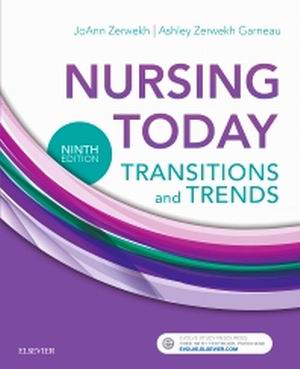
Nursing Today: Transition and Trends, 9th Edition is associated with JoAnn Zerwekh and is designed around the realities of nursing education and professional practice.
Rather than focusing only on memorizing isolated facts, the material covers topics that connect nursing education with what students eventually encounter in real clinical and professional environments.
That’s one reason students often look for additional practice material alongside the textbook.
Reading a chapter can make you feel like you understand everything. Then you see an exam question and suddenly think, “Wait… what?”
Yep. Been there.
Practice questions expose that gap.
Why Students Look for a Test Bank for Nursing Today 9th Edition
Nursing exams can be tricky because the questions aren’t always simple recall.
You might know a definition perfectly and still struggle when you have to apply the concept to a patient scenario.
That’s where practice questions can help.
A useful question set can help you:
- Review important concepts from each chapter
- Recognize common question patterns
- Practice applying nursing principles
- Identify subjects you haven’t mastered yet
- Build confidence before an exam
- Get used to reading scenario-based questions
- Review incorrect answers instead of simply moving on
The last one is huge.
Getting a question wrong isn’t necessarily bad. Actually, it can be one of the most useful parts of studying.
How to Use a Nursing Today 9th Edition Test Bank Effectively
Here’s where I’d recommend doing things a little differently.
Don’t just blast through 100 questions and look at your score.
That feels productive. Sometimes it even feels really productive.
But if you’re guessing your way through questions, checking the answer, and immediately moving to the next one, you may not be learning much.
Instead, try this approach.
1. Read the Chapter First
Start with your textbook or assigned course material.
Pay attention to concepts your instructor emphasizes because those are often more important than random details buried somewhere in a chapter.
Make a short list of concepts that feel confusing.
2. Practice Questions Without Looking at the Answers
Give yourself a realistic attempt.
Read the entire question carefully before choosing an answer.
Nursing questions can contain small details that completely change what the question is asking.
So don’t rush.
3. Review Every Incorrect Answer
This is probably the most valuable step.
If you choose the wrong answer, don’t just think, “Oops.”
Ask yourself:
Why did I choose it?
Was the concept unclear?
Did you misunderstand the question?
Did you miss an important word?
Were two options confusing?
That little bit of reflection can make your next study session much more effective.
4. Keep an Error List
You don’t need a giant notebook.
A simple document or spreadsheet can work.
Track:
- Topic
- Question you missed
- Why you missed it
- Correct concept
- What you need to review
After a few study sessions, patterns usually start showing up.
Maybe you keep missing questions about ethics.
Maybe leadership concepts are giving you trouble.
Maybe you understand the theory but struggle with application questions.
Now you know exactly what to study.
Nursing Today 9th Edition Practice Questions vs. Memorization
This is something nursing students sometimes underestimate.
Memorization definitely has a place in nursing education. You need to know terminology, principles, procedures, classifications, and plenty of other information.
But nursing isn’t only about remembering facts.
You also need to understand why something is correct.
Imagine two questions.
The first asks you to identify a definition.
The second gives you a patient situation and asks what the nurse should do next.
The second question requires more than memory.
It requires judgment.
That’s why practice questions can be so helpful when they’re used as a learning tool rather than an answer key.
How Test Bank Questions Can Help With Exam Preparation
One advantage of practice questions is that they give you a different way to interact with the material.
Instead of reading:
“Here is a concept.”
You’re forced to think:
“What would I actually do with this information?”
That mental shift is important.
It can also help you become more comfortable with questions where several answers initially look reasonable.
And those are often the annoying ones.
You know the type.
You read all four choices and think, “Well… technically, three of these sound right.”
That’s where understanding the underlying nursing principle becomes much more useful than memorizing an answer.
Study Tips for Nursing Today 9th Edition
If you’re preparing for an exam using Nursing Today, 9th Edition, here are a few practical strategies worth trying.
Study in Smaller Sessions
Trying to cram an entire textbook into your head the night before an exam usually isn’t the best strategy.
Break your studying into manageable sessions.
For example:
- Read one section
- Make brief notes
- Practice related questions
- Review mistakes
- Move to the next topic
Simple, but effective.
Use Active Recall
Close the book.
Seriously.
Then try explaining the concept in your own words.
If you can explain it without staring at your notes, you probably understand it better than if you simply reread the same paragraph five times.
Mix Reading With Questions
Don’t spend your entire study session reading.
Alternate between reviewing material and answering questions.
This keeps you actively engaged and helps reveal what you actually know.
Explain Concepts Out Loud
This sounds a little silly until you try it.
Pretend you’re explaining the concept to a classmate who missed the lecture.
If you get stuck halfway through your explanation, congratulations—you’ve just found something you need to review.
Study With Classmates
A small study group can be surprisingly useful.
One person can create questions, another can explain a concept, and someone else can challenge the answer.
Just make sure the group doesn’t turn into two hours of talking about everything except nursing.
It happens.
Are Test Banks Useful for Nursing Students?
They can be.
But the usefulness depends heavily on how you use them.
A test bank should ideally function as a practice and review resource, not as your entire study strategy.
If you understand the reasoning behind an answer, you’re building knowledge.
If you’re simply memorizing that “Question 27 = C,” you’re probably setting yourself up for trouble when your instructor changes the wording.
And instructors absolutely can change the wording.
That’s why concept-based studying is safer.
What Should You Look for in Nursing Practice Questions?
Not every question set is equally useful.
When you’re evaluating practice material, look for questions that encourage you to understand concepts rather than merely memorize trivia.
Good practice questions should generally:
- Relate to the textbook material
- Test understanding, not just recall
- Include realistic scenarios
- Have clear explanations
- Encourage clinical reasoning
- Cover multiple topics
- Help identify knowledge gaps
Explanations are especially helpful.
Knowing that an answer is wrong is one thing.
Understanding why it’s wrong is another.
Can You Study for Nursing Exams Without a Test Bank?
Absolutely.
A test bank isn’t mandatory for learning nursing material.
Your textbook, lectures, class notes, instructor resources, clinical experiences, and reputable educational resources can all contribute to your preparation.
Practice questions are simply another study method.
Think of them like a gym for your exam skills.
You still need to learn the concepts. The questions give you a place to practice using them.
A Simple Nursing Exam Study Routine
If you’re feeling overwhelmed, keep it basic.
Try something like this:
Step 1: Review your lecture notes.
Step 2: Read the relevant textbook sections.
Step 3: Write down five to ten key concepts.
Step 4: Answer practice questions without checking answers first.
Step 5: Review every mistake.
Step 6: Revisit the concepts behind those mistakes.
Step 7: Take another short practice quiz later.
That last part matters because repetition over time is generally more useful than one giant cram session.
Common Mistakes Students Make With Test Banks
Let’s get this out of the way.
A lot of students use practice questions the wrong way.
Memorizing the Answer Choices
If you only remember which letter was correct, you haven’t really learned the concept.
Skipping Explanations
Even when you get the question right, reading the explanation can reinforce your reasoning.
Doing Too Many Questions at Once
More questions don’t automatically mean better studying.
Sometimes 25 carefully reviewed questions are more useful than 150 rushed ones.
Ignoring Weak Areas
If you repeatedly miss questions about the same topic, don’t keep avoiding it.
That topic is basically waving a little flag saying, “Hey, study me.”
Listen to the flag.
Where Does the Test Bank Fit Into Your Overall Study Plan?
Think of it as one piece of the puzzle.
Your overall preparation might look something like:
Textbook → Lecture Notes → Concept Review → Practice Questions → Mistake Review → Repeat
That approach gives you multiple ways to interact with the material.
And personally, I think that’s much more useful than relying on a single resource.
The goal isn’t to recognize a question you’ve seen before.
The goal is to recognize the concept even when the question looks completely different.
Frequently Asked Questions
What is a test bank for Nursing Today 9th Edition by Zerwekh?
A test bank is a collection of practice questions associated with a textbook. For students, practice questions can be used to review concepts, test understanding, and identify areas that need additional study.
Is the Nursing Today 9th Edition test bank good for exam preparation?
It can be useful as a supplemental practice resource. The best results usually come from combining practice questions with textbook reading, lecture notes, active recall, and review of incorrect answers.
How should I study with Nursing Today 9th Edition practice questions?
Start by studying the relevant textbook or lecture material. Then answer practice questions without looking at the answers, review your mistakes, and return to the concepts you struggled with.
Should I memorize test bank answers?
No. Memorizing answer choices isn’t a reliable way to prepare for nursing exams because instructors can change the wording or create new scenarios. Understanding the reasoning behind an answer is much more valuable.
Can practice questions replace reading the Nursing Today textbook?
Not really. Practice questions work best as a supplement rather than a replacement for your course material. They’re useful for checking what you understand after studying the underlying concepts.
So, What’s the Bottom Line?
If you’re searching for a Test Bank for Nursing Today 9th Edition by Zerwekh, you’re probably looking for a way to make exam preparation a little more manageable.
That makes sense.
Just don’t fall into the trap of treating practice questions like an answer sheet. Use them to challenge yourself, find weak spots, and figure out why an answer makes sense.
Because when exam day arrives, your instructor probably won’t hand you the exact question you practiced yesterday.
They’ll change the scenario.
They’ll twist the wording.
And that’s when actually understanding the material pays off.
So study the concepts, practice applying them, learn from your mistakes, and keep going. Nursing school is demanding enough without making studying harder than it needs to be.
Reviews
There are no reviews yet.